Get cat vomit and hairball stains out of carpet (and the yellow shadow)

The problem
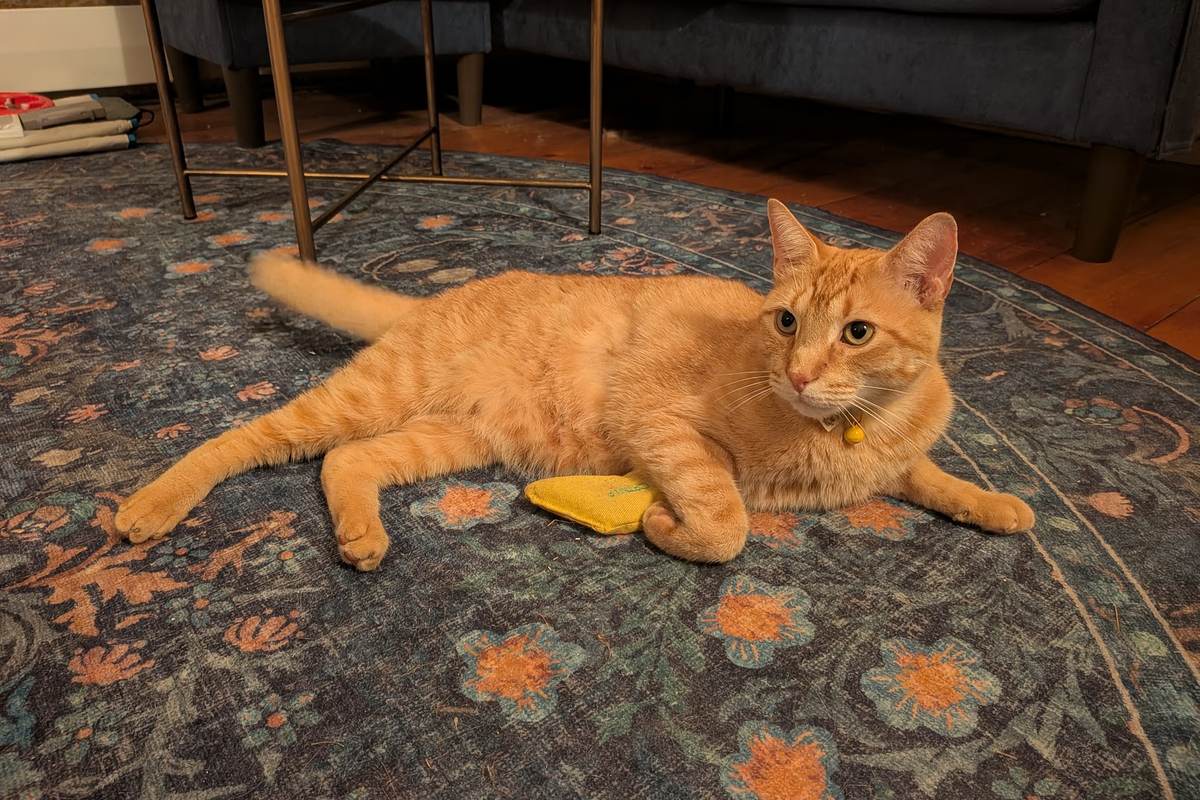
The house can be mostly tile or laminate, and the cat will still walk past all of it to throw up on the one rug. Preferably the light-colored one. Preferably at 3am, so you find it barefoot in the morning. The lump comes up easily enough. What stays is a yellow or orange shadow that doesn’t move no matter how much you dab at it, and sometimes a smell that comes back when the room gets humid.
This comes up constantly in cat and cleaning forums. Owners describe bright orange spots on loop-pile carpet that fade only a little with a pet spray, an heirloom rug that’s become the cat’s favorite spot, and a spot that went darker after a cleaner was sprayed on without testing and then not rinsed out. The common thread in the answers: lift it without grinding it in, clean it with a mild product, rinse the product out, and dry it fast. Most bad outcomes come from scrubbing, over-wetting, or stacking home remedies on top of each other.
First, a cat check: an occasional hairball is common, but frequent vomiting, vomiting food regularly, or any change in appetite, energy, or litter habits is worth a call to your vet. This guide covers the cleanup and the carpet, not the cause.
Step 1: Figure out what you’re dealing with
| What you see | What it usually is | First move |
|---|---|---|
| Fresh, wet mess or a hairball sitting on top | Solids plus stomach fluid soaking in | Lift with a spoon or card, blot, then clean (Step 2) |
| Dried, crusty spot you found later | Dried solids and residue in the pile | Break up and vacuum the dry bits, then rehydrate with cool water and clean (Step 3) |
| Clean to the touch, but a flat yellow mark remains | Bile pigment staining the fiber | Spot-test a carpet-safe oxidizing stain remover (Step 4) |
| Orange, red, or pink mark | Food or treat dye acting like a dye stain | Same as above; often needs a few rounds or a professional |
| Looks clean, smells when damp | Residue left deep in the pile or pad | Enzyme cleaner with a long dwell time, then rinse and extract |
| Spot got darker or browner after cleaning | Cleaner or soap residue left in, or wicking from over-wetting | Stop adding products; rinse with plain water and extract |
| Wool, silk, antique, or hand-knotted rug | Fiber that reacts badly to many cleaners | Blot, cool water only, and call a rug cleaner |
Step 2: Fresh mess, right now
- Lift, don’t press. Scoop solids with a spoon, a plastic card, or a folded paper towel, working from the edges in. Wiping or pressing pushes it deeper into the pile.
- Blot with plain white cloth or paper towels. Colored or printed towels can transfer dye onto wet carpet. Press, lift, switch to a clean section. No scrubbing; it frays the fibers and spreads the spot.
- Spot-test your cleaner. Try it inside a closet or under a sofa first and blot with a white cloth to see if any color comes off. This is the step people skip and regret.
- Apply cleaner and let it work. Use an enzyme pet stain-and-odor cleaner, or a very weak mix of a few drops of clear dish soap in a cup of cool water. Follow the label’s dwell time; enzyme products need time, not elbow grease.
- Rinse it out. Mist with plain cool water and blot, or run a small spot cleaner with water only. Leftover soap and cleaner attract dirt and are a common reason the spot comes back darker.
- Dry fast. Put a thick folded white towel on the spot, weigh it down with a heavy book, and leave it for an hour or so. A fan helps. The faster it dries, the less it wicks back up.
Step 3: Dried spot you found later
- Break up and vacuum the dry bits rather than wetting a crust and smearing it.
- Rehydrate with cool water, lightly misted, and blot. Let it sit a few minutes and repeat until the residue softens.
- Then follow Step 2 from the cleaner onward. Give an enzyme cleaner the full dwell time on the label; it may take two rounds.
- Keep it cool. Hot water or steam before the residue is out can set protein stains. Save the steam cleaner for after the spot is gone, if at all.
Step 4: The yellow (or orange) shadow
If the spot is clean and soft but still yellow, it’s pigment, not residue. More enzyme spray won’t fix it.
- Try a carpet spot remover made for tough stains on synthetic carpet. Folex comes up repeatedly in cleaning forums for this. Spot-test first, and follow the label.
- Oxidizing (peroxide-type) carpet stain removers can lift bile and dye on many synthetic carpets. They can also lighten carpet dye, so spot-test, use sparingly, and never use them on wool or silk.
- Work in rounds. Apply, wait, blot, rinse, dry fully, then look again. Some yellow wicks up as the spot dries; another round the next day often helps more than soaking it once.
- No chlorine bleach. It strips color and can damage fibers.
- Know when to stop. If two or three careful rounds don’t move it, or it’s wool, a professional carpet or rug cleaner has stronger extraction and the right chemistry. Several pros in carpet-cleaning forums say the most common fix they see is flushing out what owners piled on.
Step 5: Make the next one easier
Owners widely report you can’t reliably train a cat to throw up on hard floors; many cats seem to prefer something soft they can grip. So plan for where it happens.
- Keep a kit near the rug. White cloths, a spoon or scraper, enzyme cleaner, and a towel in one caddy. Speed matters more than product.
- Put washable rugs where the cat hangs out. A machine-washable rug or runner in the cat’s favorite spots turns a carpet stain into a laundry load.
- Protect the bed and couch. A waterproof blanket or throw on the cat’s favorite napping spot catches hairballs before they reach the mattress or cushions.
- Brush during shedding season. Less loose fur on the cat can mean less fur for them to swallow while grooming. Ask your vet about hairball diets or remedies.
- Fast eaters: if your cat bolts dry food and brings it back up soon after, ask your vet; owners commonly try a slow-feeder bowl or smaller, more frequent meals once health issues are ruled out.
The products, compared
| Product | What it does | Good for | Watch out for | Shop |
|---|---|---|---|---|
| Enzyme pet stain & odor cleaner | Breaks down protein and organic residue that causes smell | Every fresh or rehydrated vomit spot | Needs the full dwell time; spot-test; rinse afterward. Doesn’t remove pigment stains on its own. | Check on Amazon |
| Tough-stain carpet spot remover (e.g. Folex) | General carpet spotter for set-in stains | Yellow or orange marks after the residue is gone | Spot-test, especially on wool or natural fibers; rinse residue out. | Check on Amazon |
| Oxidizing pet stain remover (peroxide-based) | Lightens bile and dye pigment | Synthetic carpet with a stubborn yellow shadow | Can lighten carpet color. Never on wool or silk. Test in a hidden spot first. | Check on Amazon |
| Portable carpet spot cleaner (e.g. Bissell Little Green) | Sprays, scrubs, and sucks the liquid back out | Homes with carpet and a cat who throws up regularly; rinsing out cleaner | Rinse the tank and hose after each use. Run a water-only pass at the end so no solution is left behind. | Check on Amazon |
| White microfiber cloths | Blotting without dye transfer | Every cleanup | Pick white or undyed. Wash separately after vomit cleanup. | Check on Amazon |
| Machine-washable rug or runner | A rug top you can throw in the washer | The cat’s favorite spot, hallways, beside the bed | Check that it fits your washer and how it should be dried; use the recommended rug pad so it doesn’t slide. | Check on Amazon |
| Waterproof blanket or furniture throw | Keeps hairballs off the mattress, duvet, or couch | Cats who nap (and throw up) on beds and sofas | Look for a quiet, soft fabric so the cat still uses it; wash on the label’s settings to keep it waterproof. | Check on Amazon |
| Deshedding brush or grooming comb | Removes loose undercoat before it’s swallowed | Long-haired cats and heavy shedding seasons | Short, gentle sessions; stop if the cat gets annoyed. Not a substitute for asking your vet about frequent hairballs. | Check on Amazon |
These are examples of each product type, not ranked picks. Inclusion is not a paid placement; check the current listing for size, price, fiber compatibility, and what’s included before buying. Always follow the cleaner’s label.
When it “didn’t work”
- The spot came back after drying. Residue wicked up from deeper in the pile. Mist with water, blot, and dry under a weighted towel again, or run a spot cleaner with water only.
- It’s darker than before. Usually leftover cleaner or soap, or too much water. Stop adding products and rinse and extract with plain water.
- It smells when the weather is humid. It soaked into the pad. A longer enzyme soak and strong extraction can help; a pro may need to treat the pad.
- The color is lighter now. The product lifted carpet dye. Stop using it on that carpet; a pro can sometimes color-correct.
- It’s a wool or antique rug. Stop experimenting and call a rug cleaner who handles that fiber.
What to skip
- Scrubbing or wiping. Spreads the stain and roughs up the pile.
- Piling on home remedies. Baking soda, vinegar, club soda, then a store spray: each one leaves residue, and some react with each other. Pick one approach and rinse it out.
- Hot water or steam first. Can set protein stains before they’re out.
- Chlorine bleach, or oxygen bleach on wool. Strips dye and damages fiber.
- Scolding the cat. They don’t choose where it happens the way we do, and it won’t move it to the tile.
Quick decision path
- Fresh? Lift, blot, spot-test, enzyme clean, rinse, dry under a weighted towel.
- Dried? Vacuum the crumbs, rehydrate with cool water, then the same steps.
- Clean but yellow? Spot-test a tough-stain or oxidizing carpet remover, in rounds. Not on wool.
- Darker after cleaning? Water-only rinse and extraction, no more products.
- Wool, antique, or still there after a few rounds? Call a carpet or rug cleaner.
- Happens often? Washable rugs in the cat’s spots, a cleanup kit nearby, and a call to your vet.
Related guides
Find more cat fixes on Pinterest!
Follow Cat Solutions That Work