Stop a cat from tracking litter around the house

The problem
You scoop the box, sweep the floor, and by evening there are granules in the hallway, the socks, and the bed. People keep asking for the same thing: an unscented litter that does not hitchhike out of the box, plus a mat and a box style that catch what still escapes. It is a year-round complaint, not a seasonal one.
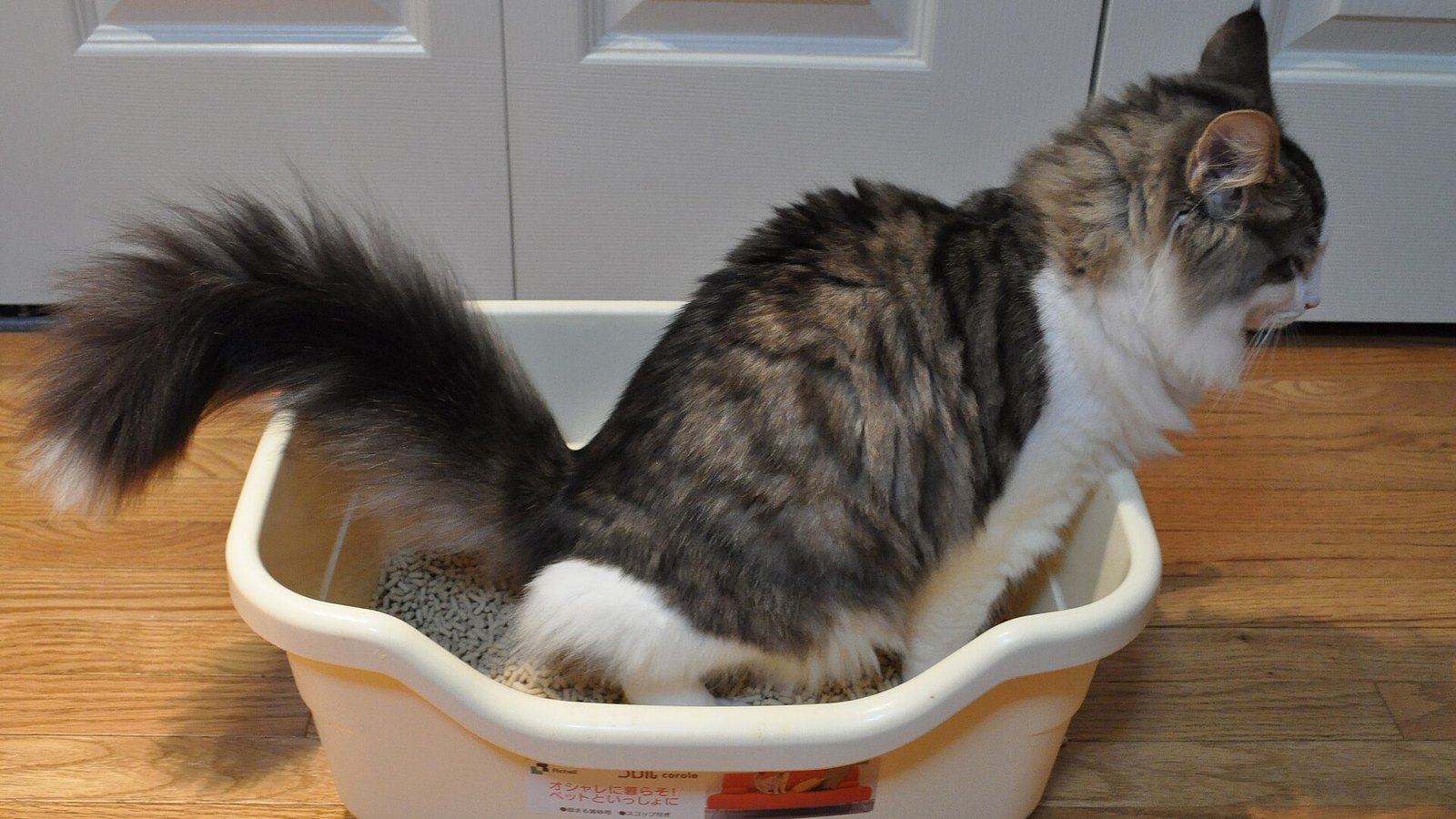
Tracking is usually a setup problem. Fine granules stick in paw pads and long fur. A low, open box lets a digger fling litter over the side. A box on carpet hides those granules until they ride into the rest of the house. Fix the litter, the exit path, and the box before you spend hundreds on an automatic system.
Rule of thumb: switch to a larger pellet or medium-grain litter, put a mat large enough for two or three steps at the exit, and use a high-sided or top-entry box if your cat flings while burying. Keep the fill shallow enough that kicking does not spray the room. If the cat stops using the box after a change, switch back and try again more slowly.
Free printable: Grab the Litter Box Setup Checklist (PDF) to walk through box size, placement, litter, and mats. Print at 100% on US Letter, and change one thing at a time if your cat is sensitive. You can also open the printable page.
Why litter leaves the box
- The granules are too small or dusty. Fine clay and small crystals sit in paw pads and in the fur between the toes. They fall off rooms later, not at the box.
- The box is overfilled. A deep mound is easier to kick over the wall. Most clumping litters work at about 2–3 inches; some clay bags (including Dr. Elsey’s Ultra) say 3–4 inches. Follow the bag, and do not pile litter above the lip.
- The walls are too low, or the only exit is a leap. Digging sends litter over a short side. A cramped closet or a box shoved in a corner can make the cat jump out instead of walking out, so nothing gets knocked off on the way.
- There is no walk-off zone, or the box sits on carpet. Without a mat, every grain that leaves the box is already in living space. Carpet holds granules and moves them farther on socks and paws.
- Long fur around the paws. Litter collects in those tufts. A groomer (or a careful trim at home, if you are comfortable) can help. Do not punish the cat for tracking; it is not spite.
Fixes, ranked by cost
| Cost | What to try | Why it helps |
|---|---|---|
| Free | Lower the fill to the depth on the bag. Move the box onto a hard floor if you can, with a few feet of walk-off space. Sweep or vacuum that landing zone daily. | Less litter in the air and on the rim means less to carry away. A hard floor is easier to see and clean than carpet. |
| Cheap | A boot tray, a cut rubber runner, or even a flattened cardboard “landing strip” at the exit, as a test. Trim paw-pad tufts on long-haired cats, or ask a groomer. | You learn whether a walk-off mat will help before buying a larger trapper mat. |
| Mid | Switch litter to larger tofu or wood pellets, or to a medium-grain clumping clay. Add a double-layer honeycomb mat big enough for two or three steps, and pour captured litter back into the box. | Bigger, smoother pellets are less likely to stick in paws. A proper mat catches what still clings for the first few steps. |
| Mid–high | Replace a low open pan with a high-sided box, or a top-entry box if your cat is young and able-bodied. | High sides stop flinging. A top-entry lid is a step the cat has to walk across, which knocks pellets off before they reach the floor. |
| High | A self-cleaning or furniture-style enclosed box, after the cheaper steps still are not enough. | Some designs reduce scatter and odor; others throw litter or bother the cat. We will cover this in a later guide. |
Change one thing at a time, and mix a new litter with the old one over several days. A cat that starts peeing beside the box is telling you the new setup failed—not that you need a stronger scent.
Litter types for less tracking
“Low tracking” on a bag is not a standard. What actually helps is size and shape: long pellets and heavier medium grains leave fewer pieces stuck in paws than fine clay. Unscented is the safer default. Some cats refuse a scented box, which creates a worse mess than tracking.
| Type | Tracking | Clumps? | Watch out for |
|---|---|---|---|
| Tofu / soybean pellets | Often low. Long, narrow pellets do not sit in paw pads the way fine clay does. | Yes | Usually costs more than clay. Bags may say flushable; that is not a free pass for your pipes, a septic system, or local rules. Flush only small amounts if you flush at all. Use a scoop with wide slots so pellets do not get stuck. |
| Wood / pine pellets | Intact pellets track very little. | No. Urine breaks them into sawdust, which you sift out. | The sawdust can track if you do not sift it. Some cats dislike the feel or the pine smell. A sifting box makes the routine easier. This is often the cheapest pellet option. |
| Medium-grain clumping clay | Lower than fine clay, because the granules are heavier and larger. | Yes | Still clay, so some dust is possible. Bags are heavy. It is a practical middle step if your cat will not accept pellets. |
| Fine clay, crystals, tiny granules | These are the usual source of “litter on every sock.” | Varies | If you keep this type, lean harder on a large mat, higher box sides, and a hard-floor placement. Do not expect a perfume to fix tracking. |
For a deeper comparison of tofu, pellets, and clay, see low-tracking litter types.
Mats, box style, and placement
Mats
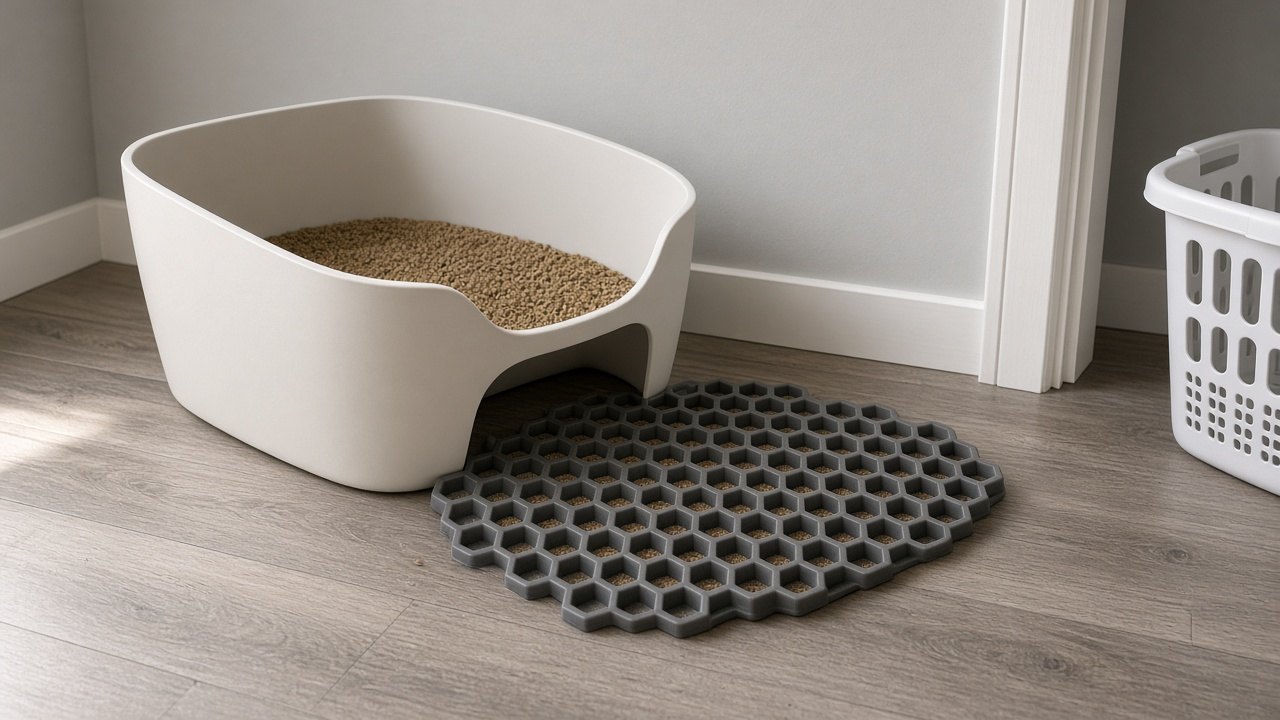
A double-layer honeycomb “trapper” mat works because litter falls through the holes and sits on the waterproof base until you dump it back into the box. Size matters more than brand: the cat should take two or three steps on the mat, not hop over a small square. Place it at the exit. If your cat sprints out, add a longer runner after the trapper. Shake or pour the captured litter back; rinse the mat when it gets dusty. A later guide will go deeper on litter mats.
Box style
- High-sided open box. Best first upgrade for a digger who flings litter over a short wall. The cat can still walk in, which matters for older or less agile cats. Check the interior length and width—your cat should be able to turn around.
- Top-entry box. The lid is a step. Litter gets knocked off before the cat reaches the floor, and it can keep a dog out of the box. Skip this style for kittens, seniors, and cats with arthritis, extra weight, or any trouble jumping.
- Covered front-entry box. It can catch some scatter and contain odor, but some cats feel trapped, and odor can build up inside. The doorway can still be a fling path.
- Self-cleaning boxes. Helpful for some households, messy or noisy for others, and they cost much more. See the planned self-cleaning boxes guide.
Placement
Put the box on a hard floor with a clear walk-off path, not in a tight closet that forces a leap, and not on a furnace vent that blows dust around. If the box has to live on carpet, put a large waterproof mat under and around it. If you have more than one cat, the usual rule is one box per cat plus one. A box that is hard to reach will get used less, which is a worse problem than tracking.
A short product list
These are real listings we opened and confirmed. Specs below are what the Amazon page claimed when we checked. We are not inventing prices, star ratings, or test scores. Sizes and scents can vary on the same page, so pick the option you want and re-read the current details.
| Name / type | Role | What the listing says | Notes | Link |
|---|---|---|---|---|
| Tuft & Paw Really Great Cat Litter (unscented charcoal, two 9.25 lb bags) | Tofu / soybean pellets | Ultra low tracking; pellet shape meant to stay out of paws; unscented, with charcoal for odor; screened for dust; clumping; labeled flushable | A commonly recommended pellet tofu litter. Even if a bag says flushable, check your plumbing, septic system, and local rules, and only flush small amounts if you flush at all. | Check on Amazon |
| Dr. Elsey’s Ultra unscented clumping clay (40 lb bag) | Medium-grain clumping clay | 100% bentonite clay; hard-clumping medium grain; unscented; claims low tracking and a 99.9% dust-free formula; bag directions say fill 3–4 inches | A practical clay option if your cat will not switch to pellets. The bag is heavy. | Check on Amazon |
| Feline Pine Original (40 lb bag) | Wood / pine pellets | 100% natural pine pellets; no synthetic perfumes; non-clumping (urine breaks pellets down) | Intact pellets usually stay in the box; sift out the sawdust or it can track. Some cats need a gradual switch because of the feel or the pine smell. | Check on Amazon |
| iPrimio Cat Litter Trapper Mat (32″ × 30″, black) | Double-layer honeycomb mat | Honeycomb top over a urine-repellent base; open edge so you can pour litter back out; 32″ × 30″ | Buy a size the cat has to walk across, not hop over. This jumbo size is the better starting point for most boxes. | Check on Amazon |
| Nature’s Miracle High-Sided Litter Box | High-sided open box | Claimed dimensions 23″ L × 18.5″ W × 11″ H | An 11″ wall helps with flinging while still letting the cat walk in. Confirm your cat can turn around comfortably. | Check on Amazon |
| IRIS USA top-entry litter box (large, black/gray) | Top-entry box | Claimed dimensions 20.75″ L × 16.12″ W × 14.62″ H; listing mentions reduced tracking and a hooded lid | Good only if your cat can jump onto the lid and is not a kitten, senior, or mobility-limited. The interior is not huge—measure your cat. | Check on Amazon |
| Self-cleaning litter boxes | Automatic / rotating boxes | Category search (models change often) | Worth a look after cheaper fixes. Read current listings for size, noise, and whether the design throws litter. Full guide coming later. | Check on Amazon |
Inclusion is not a paid ranking. Specs can change, so always read the current listing. Browse more: low-tracking unscented litter, honeycomb litter mats, and high-sided litter boxes on Amazon.
Quick decision path
- Lower the fill and move the box onto a hard floor with a walk-off path.
- Put a large trapping mat at the exit so the cat has to take a few steps.
- If granules still leave the room, switch to larger tofu or wood pellets, or to a medium-grain clumping clay, mixed in gradually.
- If the cat flings while digging, step up to a high-sided box. If the cat is able-bodied and still tracks, try top-entry.
- Still a mess after that? Look at self-cleaning or furniture-style boxes, and keep the mat anyway.
- If the cat stops using the box, undo the last change and talk to a veterinarian if accidents continue.
Related guides
Find more cat fixes on Pinterest!
Follow Cat Solutions That Work