Stop a cat from scratching the couch (when the scratching post gets ignored)
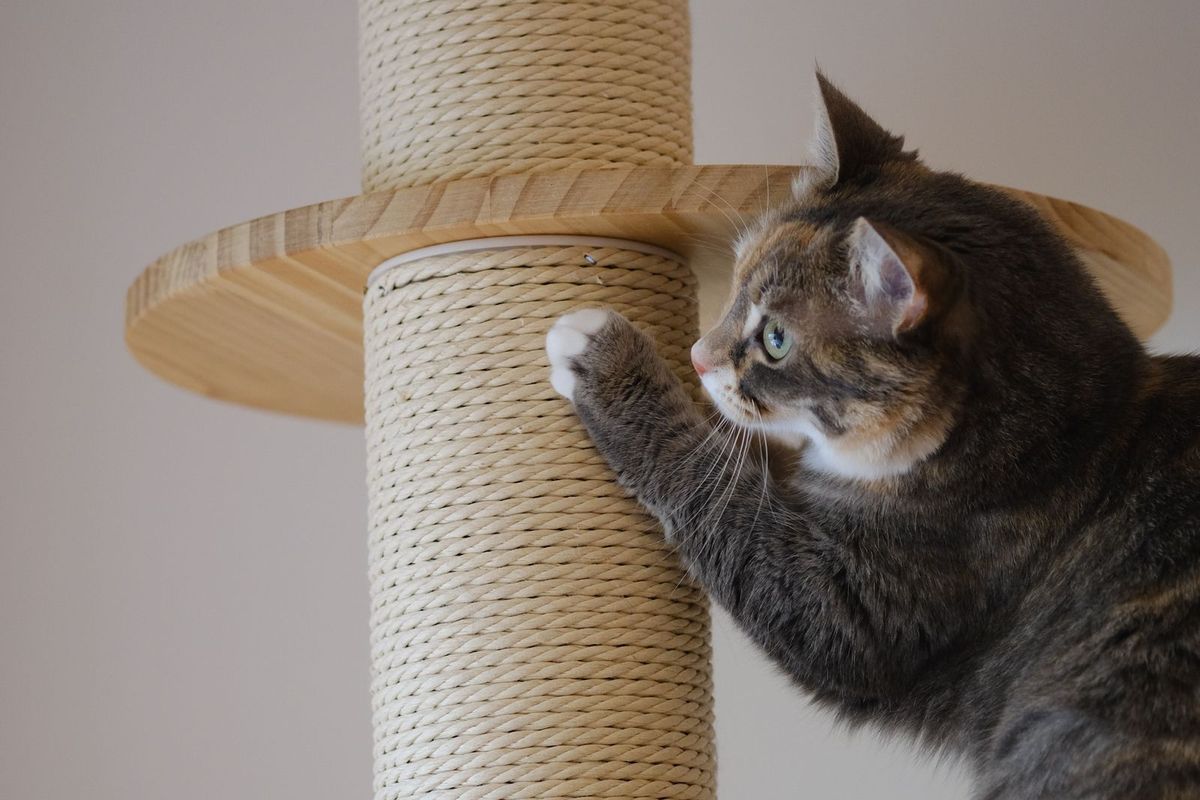
The problem
You bought a scratching post. Maybe three. The cat sniffs them, uses one now and then when there’s catnip on it, and then walks past it to shred the same arm of the couch. You cover the corner, it works, you take the cover off, and the cat goes right back.
That’s the most common version of this complaint, and it has a few predictable causes. Scratching isn’t misbehavior. Cats scratch to shed the old outer layer of their claws, stretch, and leave scent and visible marks on spots that matter to them, which is why the couch by the living room path gets hit and the post in the spare room doesn’t. Posts get ignored when they’re the wrong texture, the wrong angle, too short, too wobbly, or in the wrong place. The fix is to make the post better than the couch at the exact spot the cat already likes, and make the couch worse to scratch for a while.
Rule of thumb: a sturdy post that’s tall enough for a full stretch, pressed right against the damaged corner, plus a cover on that corner for weeks to months (not days), plus a treat every time the cat uses the post. Then move the post a few inches at a time, if you want to move it at all.
Step 1: Read how your cat scratches
Watch the damage. It tells you what to buy.
| What you see | What the cat wants | Pick this |
|---|---|---|
| Shredded couch arms or the side of the sofa, cat stretched up tall | Vertical scratching with a full stretch | A tall, heavy sisal post (around 30 inches or taller) that doesn’t wobble |
| Rug, carpet edges, or the carpet by a doorway | Horizontal scratching | A flat cardboard scratcher or sisal mat on the floor |
| The low front edge of the couch or a box spring | Angled or low scratching | An inclined or lounge-style cardboard scratcher |
| Doorframes, wood chair legs | Hard, rough, vertical surface | A sisal post, or a scratcher that hangs on a door or mounts on the wall |
| Scratches right after waking up, or when you walk in | Morning stretch and greeting marker | A scratcher next to the sleeping spot and one by the front door |
| Started after a move, new furniture, or a new pet | Marking a changed territory | A scratcher at every spot being hit, and patience; it often settles in a few weeks |
Step 2: Why the post you already have gets ignored
- It wobbles. Push it with one hand. If it moves, the cat won’t trust it. Short posts on small bases are the usual culprit.
- It’s too short. Cornell’s Feline Health Center says a post should be at least as tall as your cat standing on its hind legs with front legs stretched out. Many cheap posts are well under that.
- Wrong texture. Cats that shred nubby upholstery usually prefer rough sisal (woven or rope). Carpet-covered posts feel too much like the rug you don’t want them scratching.
- Wrong spot. A post in a corner of the spare room can’t compete with the couch in the middle of the house. Scratching is a marker, so it goes where everyone walks.
- It looks too good. Don’t replace a shredded post just because it’s ugly. A worn post is a post that works. Replace it only when it starts to fall apart.
Step 3: Move the scratching to the post
- Put the new scratcher directly against the spot being damaged, not across the room. If the cat hits both couch arms, put one at each arm. It looks silly for a while; that’s fine.
- Cover the damaged spot so it’s no longer the best option (see Step 4). The cat should find a bad surface where the couch was and a great surface right next to it.
- Make the post interesting: rub a little catnip or silvervine on it, or drag a wand toy up and down it so the cat grabs at it.
- Reward every use with a treat or praise right away. Cats often scratch right after a nap and when you come home, so be ready at those times.
- When you catch the cat on the couch, calmly pick them up or call them, take them to the post, and reward them there. No yelling, no spray bottle.
- Leave the cover on for weeks to months. Taking it off after a week is the most common reason this fails.
- Once the cat has used the post reliably for a while, remove the cover from one spot at a time. If you want the post somewhere else, move it a few inches a day.
Step 4: Protect the couch while the habit changes
- Clear corner guards. Stiff clear plastic sheets that wrap the couch arm or corner. They hold up much longer than tape, and the cat’s claws slide off them. Most attach with twist pins into the upholstery; some owners just tuck or tape them.
- Double-sided scratch tape. Cats dislike the sticky feel. Read the maker’s warnings first: Pioneer Pet says Sticky Paws may damage some surfaces (it lists wood finishes, paint, leather, vinyl, microfiber, and wallpaper), doesn’t work on fabric treated with stain repellent, and should be replaced regularly. Test a hidden spot.
- A throw or fitted cover. A blanket tucked tight over the arm, or a stretch sofa cover, takes away the texture the cat wants. It protects the fabric but doesn’t teach anything on its own, so pair it with a post.
- Block the spot. Push the couch so the favorite corner is against a wall, or put the post or a side table in front of it.
Step 5: Keep the claws blunt
- Trim the nails every couple of weeks. Short tips do much less damage to fabric. Take off only the sharp clear tip and stay well away from the pink part inside the nail. If you’re unsure, ask your vet or groomer to show you once.
- Try nail caps. Soft vinyl caps (Soft Paws / Soft Claws) are glued over the front claws. The makers say each application lasts about 4 to 6 weeks and falls off as the nail grows, and that they’re for indoor-only cats. Some cats chew them off at first.
Step 6: The products, compared
| Product | What it does | Good for | Watch out for | Shop |
|---|---|---|---|---|
| SmartCat Ultimate Scratching Post (Pioneer Pet) | 32-inch woven sisal post on a 16 × 16 inch base, per the maker | Cats who stretch up and shred couch arms | Heavy and plain looking. Assemble the base the way the maker describes (screws in the recessed holes) or it can wobble. | Check on Amazon |
| Tall sisal scratching posts (other brands) | Vertical rough surface for a full stretch | Anyone comparing heights and colors | Check the listed height and base size; skip short posts on small bases. | Check on Amazon |
| Cardboard lounge scratcher (e.g. PetFusion Ultimate Cat Scratcher Lounge) | Curved, reversible recycled-cardboard scratcher; PetFusion lists it at 34 × 10.5 × 10.5 inches | Horizontal and angled scratchers, cats who also like to lounge | Cardboard sheds bits as it wears. Availability of specific colors changes, so check the listing. | Check on Amazon |
| Flat cardboard scratch pads | Cheap horizontal scratchers you can put anywhere | Rug and carpet scratchers, testing what your cat likes | Wear out fast; buy a multi-pack and replace as needed. | Check on Amazon |
| Couch corner scratcher (sisal that wraps the arm) | Puts a scratch surface right on the spot being damaged | Cats locked onto one couch arm | Fit varies with arm shape; measure first. | Check on Amazon |
| Clear furniture corner guards | Stiff clear plastic over the arm or corner | Covering the damaged spot for months | Twist pins leave small holes in fabric; skip the pins on leather. | Check on Amazon |
| Sticky Paws furniture strips (Pioneer Pet) | Clear double-sided strips, 2 × 12 inches, 24 per pack per the maker | Short-term deterrent on fabric arms | Not for many finishes (see Step 4). Fur and dust make it less sticky, so it needs replacing. | Check on Amazon |
| Door-hanging or wall-mounted scratcher | Vertical scratching without a floor footprint | Small apartments, doorframe scratchers | Has to be firmly fixed; a scratcher that swings gets ignored. | Wall · Door |
| Soft Paws / Soft Claws nail caps | Vinyl caps glued over the claws | Indoor cats while the training takes hold | Pick the size by weight; makers say indoor-only, reapply about every 4–6 weeks. | Check on Amazon |
| Cat nail clippers | Keeps tips short so scratches do less damage | Every cat | Sharp clippers crush the nail less. Go slow and give treats. | Check on Amazon |
| Catnip or silvervine | Makes a new scratcher more interesting | Getting a cat to try the post the first time | Not every cat reacts to catnip; silvervine works on some that don’t. | Check on Amazon |
Specs come from the makers’ product pages. These are examples of each product type, not ranked picks. Inclusion is not a paid placement; check the current listing for size, price, and what’s included before buying.
What to skip
- Spray bottles, yelling, and swatting. The ASPCA and Cornell both advise redirecting rather than punishing. Cats tend to learn to scratch when you’re not around, and it can make them wary of you.
- Declawing. It’s surgery that removes the end bone of each toe, not a nail trim. The AVMA strongly discourages it unless it’s medically necessary, and some states and cities ban it. Everything on this page is the alternative.
- Carpet-covered posts for a rug scratcher. Teaching a cat that carpet is for scratching doesn’t help your rugs.
- Essential-oil or citrus sprays on furniture. Concentrated essential oils can be harmful to cats. Use a physical cover instead.
- Taking the cover off too soon. If the habit went back the day the cover came off, put it back and leave it longer.
Quick decision path
- Shreds the couch arm standing up? Tall heavy sisal post pressed against that arm, clear guard on the arm.
- Scratches rugs or carpet? Flat cardboard scratchers on the floor right there.
- Ignores the post you have? Shake-test it, measure its height, and move it next to the damage before buying another.
- Started after a move? A scratcher at each spot being hit, and give it a few weeks.
- Need less damage today? Trim the nails and cover the spot tonight; the post training can take longer.
Sources
Related guides
Find more cat fixes on Pinterest!
Follow Cat Solutions That Work