Self-cleaning litter boxes: when they help and when they make a new mess
The short answer
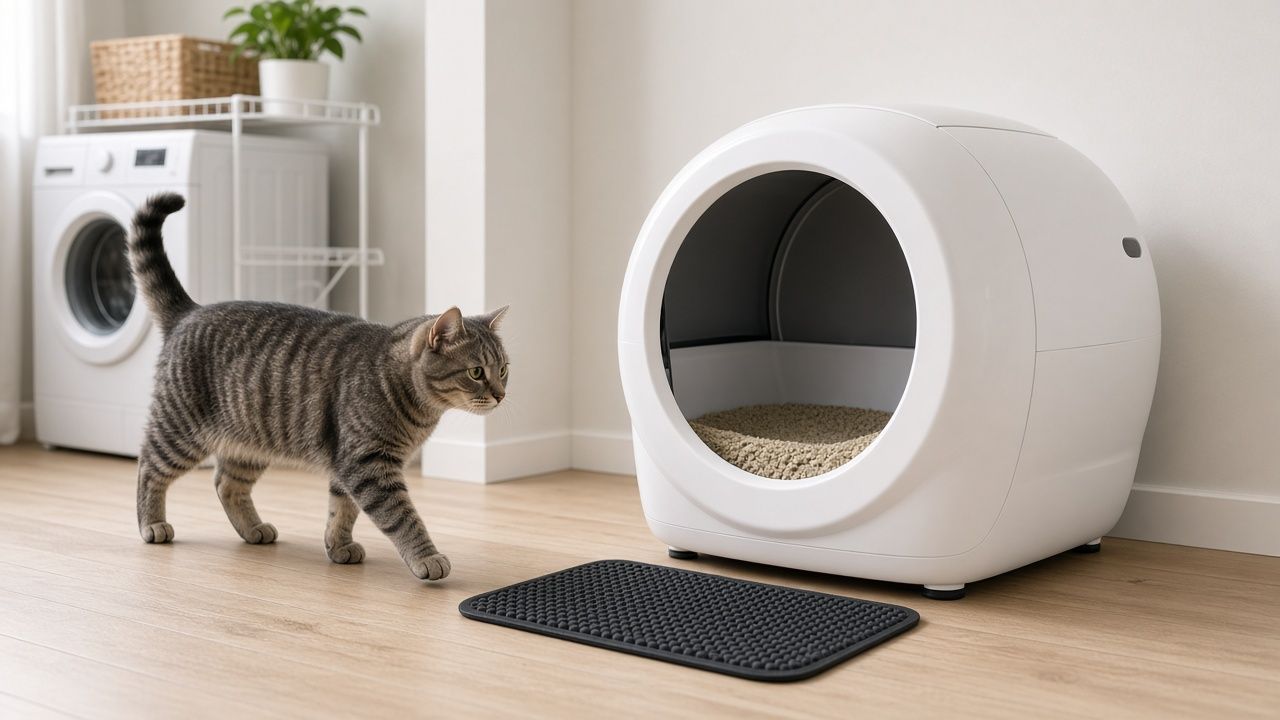
An automatic box removes waste after each visit, so the litter your cat steps on stays cleaner and the box smells less between cleanouts. It does not fix scatter on its own, and it adds new chores: emptying a waste drawer, buying liners or trays, and deep-cleaning the parts. The boxes that disappoint usually fail for one of three reasons: the cat won’t use it, the mechanism doesn’t suit the litter, or the ongoing supplies cost more than expected.
Rule of thumb: if you mainly want less smell and less daily scooping for one cat, a crystal-tray rake box is the cheapest way in, but you’ll keep buying trays. If you have several cats or want to keep using clumping litter, look at a rotating-globe box and check the minimum cat weight first. If the real complaint is litter on the floor, fix that first with the tracking guide and a good mat; a robot won’t do it for you.
Free printable: Grab the Litter Box Setup Checklist (PDF) to walk through box size, placement, litter, and mats. Print at 100% on US Letter, and change one thing at a time if your cat is sensitive. You can also open the printable page.
The three main designs, side by side
| Design | How it cleans | Litter it uses | What you still do | The trade-off |
|---|---|---|---|---|
| Rake + disposable crystal tray | After the cat leaves, a rake drags solids into a covered trap at one end. Crystals absorb urine. | The brand’s crystal litter trays (some models accept reusable trays you refill) | Swap the whole tray when it’s saturated. | Low upfront cost, but trays are an ongoing purchase. Some cats dislike the feel of crystals, and kicked crystals still scatter. |
| Rake + clumping litter | A rake pushes clumps into a waste bin after each visit. | Regular clumping litter | Empty the bin (about weekly, per the maker), top up litter, clean the rake. | No trays to buy, but rakes can smear soft stool, and clumps that break apart get left behind. |
| Rotating globe / drum | The drum turns and sifts clumps through a screen into a drawer underneath. | Clumping litter (check the maker’s list; crystals and pellets often aren’t supported) | Empty the drawer, replace liners and filters, wipe the screen. | Highest upfront cost and a big footprint. Many have cat-weight minimums and need a firm, level floor for the sensors. |
Honest fixes before you buy one
- Scatter and tracking: a robot keeps the litter bed clean, but cats still kick and carry litter. Pair any box with a mat, and read how to stop tracking.
- Odor: removing waste sooner helps a lot, but a full waste drawer or a dirty drum smells too. Plan on emptying on schedule and washing the parts.
- Small cats and kittens: weight sensors decide when it’s safe to cycle. Litter-Robot 4 lists a 3 lb minimum per cat for Automatic Mode; CATLINK lists 3.5 to 22 lb. Below that, use manual mode or wait.
- Floor: makers of sensor-based boxes say to put them on a firm, level floor, not carpet or a thick mat, or the scale and safety sensors can misread. Put the mat in front of the entrance, not under the unit.
- The switch: set it up with the cycle turned off at first, keep the old box nearby, and only remove it once your cat is using the new one. Some cats need days, and some never accept the motor noise.
- Running costs: before buying, look up the price of the trays, liners, or filters the box needs, and multiply by how often you’ll replace them.
Self-cleaning boxes on Amazon
Every link below was checked to load on Amazon on the day this guide was written. Specs are from the listings; we haven’t tested these units ourselves. Prices change often, so check the listing.
| Name | Design | What the listing says | Notes | Link |
|---|---|---|---|---|
| PetSafe ScoopFree Crystal Classic | Rake + disposable crystal tray, uncovered | Safety sensors run the cycle only when the cat is out; up to 30 days without scooping for one cat; ships with 1 disposable crystal tray; trays have a leak-guard lining and a lid; also works with ScoopFree reusable trays; 27.6 x 19.1 x 6.2 in | The lowest-cost way to try an automatic box. Budget for replacement trays. | Check on Amazon |
| PetSafe ScoopFree Clumping | Rake + clumping litter | No trays needed; rake moves clumps into a waste bin; empty the bin about once a week; waste bin, litter tray, and rake come out for cleaning; liners sold separately | For cats that already like clumping litter and owners who don’t want to buy trays. | Check on Amazon |
| CATLINK Scooper (Young Version) | Rotating globe | 57L globe and 13L waste drawer; liner change about every 15 days for one cat (maker’s test); gravity and anti-pinch sensors; litter barrier at the entrance; no Wi-Fi or app needed; for cats 3.5 to 22 lb; 23.62 x 23.62 x 27.95 in | A plug-and-play globe for people who don’t want an app. Needs floor space. | Check on Amazon |
| Whisker Litter-Robot 4 with Step & Fence | Rotating globe, Wi-Fi | Sifts waste into a drawer; app shows waste and litter levels and the cat’s weight after each use; carbon filters or optional OdorTrap packs; fence and step to cut tracking; up to 4 cats, each at least 3 lb; don’t push it against a wall or into a corner | The premium pick for multi-cat homes. Leave space around it. | Check on Amazon |
Inclusion is not a paid ranking. Browse more: ScoopFree crystal tray refills, PETKIT PuraMax boxes, and manual sifting litter boxes (a no-motor option) on Amazon.
Quick decision path
- One cat, want less smell and fewer scoops, small budget: a crystal-tray rake box, if your cat accepts crystals.
- Cat refuses crystals but you still want a rake: the clumping-litter rake version.
- Two or more cats, or a big cat: a rotating globe, after checking the weight range and floor space.
- Kitten, nervous cat, or carpet only: wait, or try a manual sifting box first.
- Main problem is litter on the floor? Start with the tracking guide, litter mats, and low-tracking litter types.
Related guides
Find more cat fixes on Pinterest!
Follow Cat Solutions That Work